Word Count 1969
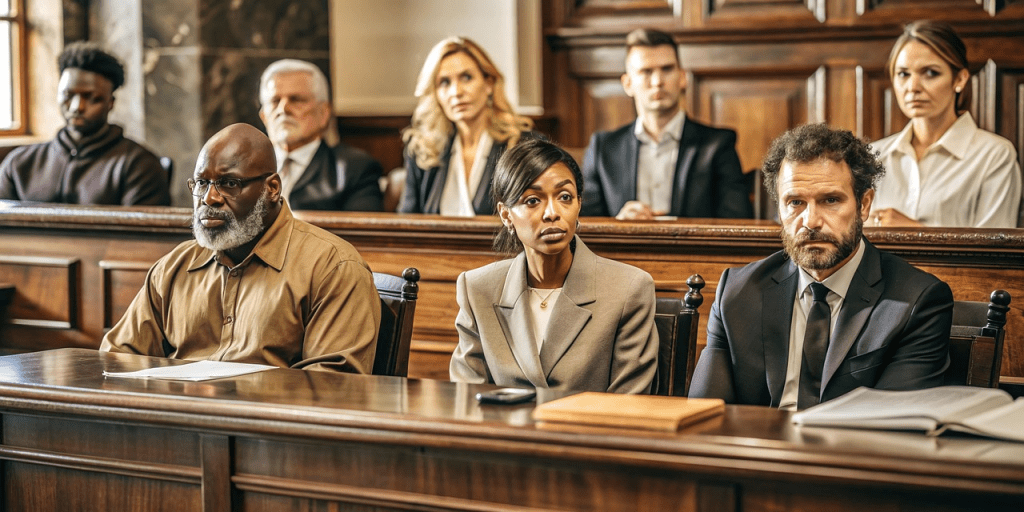
By Bill Tope and Doug Hawley
I sat alone at the long, curving walnut bar in the tavern in the middle of the day. I had been sitting there for hours, I think. I don’t remember if I drank anything, but the bartender hadn’t kicked me out yet, so perhaps I did. I wondered, not for the first time, how I’d gotten there, when I arrived and where I even lived. I shook my head.
Just then, Fahey, the barkeep whose name I somehow remembered, set a drink in front of me and said, “From a lady.”
I blinked down at a sparkling gin and tonic, with a little slice of lemon and a little slice of lime. “Who?” I asked, but he just smiled and wiped the surface of the bar. I glanced behind me, at the tables in the two room tavern and looked for a likely suspect. Everyone present seemed to be with someone else. Turning back around, I sipped the drink. It was wonderful.
I finished the drink and glanced at the clock over the back bar. It was 5 O’clock, meaning that there were yet several hours of daylight left, not unusual for the middle of summer. I wondered if I should think about dinner. Did I even have any money? The aroma of roasting meat filled the bar, and I noticed waitresses ferrying platters of BBQ to a hungry clientele. I licked my lips.
I started as Fahey placed a full plate of BBQ ribs in front of me. He was grinning. I waved my hand questioningly at the ribs and he said, “A lady.” This was too much. I can accept an anonymous gift of a drink, but a full meal I had to meet this angel of mercy and told Fahey so.
“Sorry,” he said, pouring a pitcher of specialty craft beer from the tap. “The lady wishes to remain anonymous.” He placed the pitcher at my elbow, with a frosted glass.
I dug in.
This craziness continued until after the sun was down and streetlights shined into the bar. The place was really buzzing by this time, patrons getting ready to dance to a live band, and emerging from the restrooms smelling of marijuana. The gathering was composed mostly of young college-aged individuals, half my age. And they came to party. I was kept supplied with mixed drinks and beer and yet had no clue. Around 1:00am I still sat at the bar and save for several trips to the men’s room, had stayed there throughout the day and night. The band had ceased playing and the crowd had begun to thin. Last call had already been announced. It was closing time. I gathered my light jacket and pulled it over my shoulders.
As I shifted off the barstool and my foot touched the floor, Fahey loomed behind the bar. He pushed a small, folded piece of paper across the bar. “From the lady,” he said again, with an air of mystery.
I opened the paper and read:
“You’re probably wondering about the drinks and the food and the interest from someone you’ve never met–and never will. You don’t know me, but I know all about you. I know what you’ve done and I know what you’re facing in the future. I want you to know how I admire your courage and honesty and fearlessness. Please just consider this as a random act of kindness. God be with you.”
It was unsigned.
Things began to come back to me: my residence, my job, my identity. It was like a cloud had lifted. I was the last to leave the bar. As I shuffled toward the door, I turned to Fahey, who was wiping down the bar a final time.
“Was she a pretty lady?”; I asked.
Fahey grinned and nodded. He winked.
I pushed through the door, stumbled down the sidewalk towards my car, thinking that, in just a few short hours, I would be sworn in as a witness in just the latest Trial of the Century.
When I woke up the next morning, I knew there was nothing I could do but go to court. As much as I wanted to avoid it, it had to be done. The public reciminations, even death threats, had been rife. When I got there, I was told where to wait until called. I was probably the only person involved in the trial who didn’t have a lawyer of his own; I couldn’t afford one. The defendant’s appointees had protected him from the consequences of all of his crimes, but even they could not stomach keeping him from court now that his term was finally over.
I don’t remember all of the lengthy legal wrangling, but late that day I was called to the stand. There was some preamble about my name and title and so on. Finally the plaintiff’s attorney got to it.
“Where are you employed, Mr. Ajax?” Jenkins inquired.
“I work for grounds maintenance and building services at the White House. I’m a janitor at the Executive Mansion,” I explained.
“How long have you been so employed?” he asked.
“7 months, I replied “I began January of this year.”
“What were you doing on January 19th of this year, Mr. Ajax?” he asked.
“I was taking care of my custodial duties. Dusting, vacuuming and like that.”
“What were you doing at 10pm that day?”
“I was just wrapping up outside the Oval Office.”
“Did anything unusual transpire?”
“I don’t know if it was unusual, but I did hear voices from the president’s office.”
“What could you tell us about what you heard?”
“The first thing that was clear enough to understand was ‘Come on honey, you’ve been around the block. Something we can both enjoy, and it will be good for your pocketbook. You’ll be looking for work since this gig is coming to an end.”
“Did you recognize the voice?”
“I can’t be sure, but I think it was the former president.”
“What else did you hear?”
“After that, I heard ‘Forget about that, just let me leave.’”
“And who do you think was speaking?”
“It sounded like Julie Smith, the ex-president’s one-time personal secretary.”
“Anything else?”
“I heard what may have been a loud slap, or clap. Then a high pitched scream.”
“Was there any more talk?”
“No, but the door was flung open. Ms. Smith ran out with her blouse ripped and a red handprint on her cheek. She was crying. The president was hunched over on his knees with his hands covering his crotch.”
“How did you react?” asked the lawyer.
“I was shocked,” I replied.
“Why was that?” asked plaintiff’s counsel.
“Because,” I said, “I never saw such tiny hands on a full-grown adult before.” A few snickers from the press corps.
“That will be all Mr. Ajax. Thank you for your testimony. Cross examine.”
The well known lawyer for the defense, Jim Jenkins, looked the image of a high-priced mouthpiece: fresh shave, five thousand dollar suit, six hundred dollar shoes, three hundred dollar haircut.
“What is your political affiliation, sir?” he asked.
“I’m a drunkard,” I replied. Laughter from the gallery.
Jenkins stared hard at me. “I beg your pardon?”
“Sorry,” I apologized with no real remorse. “That’s a line from a Bogart movie from the 1940s. I’ve been waiting to use it for years.”
“Your Honor,” whined Jenkins, looking up at Judge Blade on the bench.
“Mr. Ajax, this is serious,” scolded the judge, though there was a twinkle in hie eye.
“Yes sir, Your Honor,” I said contritely.
“Proceed, Counselor,” said Blade.
“Are you a registered Democrat?” thundered Jenkins.
“Yes.”
“And did you write an op-ed appearing in the Post in the run up to the last election in which you called the president a ‘miserable worm?’ “
“Yes,” I said.
“Why did you do that?” he asked next.
“Because I didn’t think they’d print ‘sonofabitch,’ ” I answered frankly. More laughter.
And things just went downward from there. The judge reprimanded me again and Jenkins’s question by itself raised eyebrows. It was as if I had a political grudge. The next question caught me off guard.
“Do you recognize the woman in the third row?” he asked, gesturing in that direction.
I hadn’t noticed before, but it was a woman from the tavern, that I had briefly met a week or ten days before.
“I saw her at a tavern,” I said, remembering.
“Is that the only time you have ever seen her?”
“Yes.”
“Would you be surprised to learn that she is the sister of the woman who has made false claims of assault against our president?”
After taking in all that, I answered honestly “Yes about the sister part; about the claims I have no clue.”
Jenkins smiled broadly at his audience and declared, “Are we supposed to believe that she didn’t use her charms in exchange for testimony favorable to the plaintiff?”
I started to sputter, but Jenkins abruptly turned his back and stalked away without saying another word.
When the defense put on their case, smelling blood, the mystery woman was the first witness they called. Jenkins went through the usual blather and then said, “State your name.”
“Kate Smith.”
“Are you the sister of Julie Smith, formerly personal secretary to the ex-president?”
“Yes.”
“Did you spot Mr. Ajax in a bar a week before he testified here today?”
“Yes.”
“And did you offer him certain privileges if he would testify in favor of your sister?”
“I did not,” she stated flatly.
Jenkins started to speak but was dumbfounded by her response. He then addressed the judge. “Your honor, this testimony is unexpected. May I have a recess?”
The judge agreed. “Yes, it is about time to adjourn. Granted. Court will reconvene tomorrow at 10am. Adjourned.”
The next day the case dragged on, with myriad witnesses offering copious testimony. Fahey was even dragged in, and testified that Kate had wined and dined me, in absentia, but admitted that we never met. The Court appeared unwilling to believe that a man would perjure himself for the sake of a side of ribs and a few beers. So, without the ability to impugn me, Jenkins folded and called a sidebar. There he proffered a generous settlement, on condition of NDAs, for which the ex-president was justifiably famous.
A month later, Julie, Kate and I got together at the same bar, but this time we all had soft drinks. Kate was all smiles, and we held hands like a couple of kids. She explained, “Julie and I always argued about politics. I was far-right, and she was a moderate. To my great shame, I agreed to set you up because I was sure Julie was hurting my president with her lies. The alt-right media convinced me the president could do no wrong. I was going to claim that, by virtue of my feminine wiles, I had convinced you to falsify your testimony about the assault. When the news host put me in touch with the president’s legal team, they were all for it. A money reward was mentioned.”
Julie asked “What changed your mind?”
“Just before I planned a rendezvous at the tavern, our neighbors, the Garcias, told me they were leaving town because of fear of being deported. We’ve known them forever. The nicest people you could ever find. I told them my president wouldn’t do that, and they gave me an earful. Next, I started to check news sources other than social media and the alt-right. Let’s just say my eyes were opened. It was such a relief to be honest on the stand. As a bonus, I got a boyfriend who’s a keeper, at least if I can slow down his drinking.”
The End
Appears in Down In The Dirt
 Doug Hawley
I’m glad to see that you guys can still work together without killing each other. That is truly an accomplishment. If I had to try it someone would be on trial. Nice statement, but I must add that all news sources are far from trustworthy anymore, due to, of course, money.
Good job
Leila
LikeLike
Leila – It may be the distance and lack of weapons that preserves our lives. Almost all of the clabbers originate with Tope. I don’t remember who got the idea – I think it was Bill. I believe I was contacted by both Bill and Maysam because of smart car (see blog). Totally weird coincidence if true. Maysam and I are having trouble geting the website to work again. For me the current one works only by search, not by clicking. I know, far more than you need/want to know.
LikeLike